





Moving Forward Newsletter
Vol 2, September 2025

Updates:
Reimagined Parking’s 40 Under 40 Honorees Reflect an Industry in Motion
Each year, the National Parking Association’s 40 Under 40 Awards provide a glimpse into what is ahead in the parking industry. This year, that future looks more dynamic and promising than ever, with three professionals from Reimagined Parking: Kim Yee, Iesha Terry, and Rebecca Laymon joining the honorees in this year’s event. We are excited about their recognition and view this as a contribution to the ongoing changes in the parking industry, now redefined by innovation and inclusivity.
For Reimagined Parking, this reflects a deep commitment not only to being at the forefront of mobility services and parking operations but also to actively shaping the next generation of leadership. We are excited to see the future represented by our best and brightest, who will lead, build teams, drive revenue, streamline operations, and rethink the relationship between parking and urban life.
Join us in congratulating our honorees for moving us forward into the next phase of change in the parking industry.

‘We are proud to recognize the positive impact of the parking industry’s best and brightest young professionals…’
-National Parking Association

Kim Yee, Director of Strategic Accounts in Toronto, has become a powerhouse in cross-market client strategy. Known for her ability to forge long-term partnerships and lead with both empathy and precision, Kim is emblematic of the modern parking executive: equally fluent in analytics and customer experience. Her work has elevated Reimagined Parking’s presence across key Eastern Canadian markets and deepened its reputation for delivering enterprise-grade service.

Rebecca Laymon, CPP, General Manager in Tennessee, represents operational excellence at its finest. With her Certified Parking Professional (CPP) credential and a reputation for hands-on leadership, Rebecca is the kind of general manager who ensures everything runs smoothly. Her ability to manage large teams, complex assets, and evolving customer demands makes her a vital part of Reimagined Parking’s success in the Southeast—and a standout among her industry peers.

Iesha Terry, Senior Business Development Specialist, brings both hustle and heart to her role. With a focus on creating compelling proposals and building new business relationships, Iesha has a gift for translating the complexity of clients’ business challenges into responsive opportunities. In her leadership role, she has also become a mentor to younger professionals, a vocal advocate for equity in the workplace, and a role model for navigating growth with integrity.
At Reimagined Parking, their success is both a celebration and a signal: that when companies commit to diversity, inclusion, and empowerment, the entire industry benefits. These 40 Under 40 honorees aren’t just shaping the future of Reimagined Parking—they’re redefining what’s possible for the whole sector. And for the next generation looking up, it’s not just an award – it’s an invitation to keep moving.
In Focus:
Navigating Parking’s Quiet Revolution
For decades, parking has been regarded as generic, stable, integrated, and largely overlooked in terms of technological advances. The simpler, low-tech devices such as pay stations, coin meters, and automated monthly permitting formed the backbone of municipal and private parking revenue worldwide. Beneath the surface, something has been shifting. Moving first from a crawl and now to a sprint, parking is undergoing a quiet revolution—one that is transforming it from static real estate into an intelligent layer of urban infrastructure.
This transformation isn’t driven solely by customer demand or municipal mandates. It’s happening because the entire ecosystem around transportation is evolving. Mobility is becoming more connected, more dynamic, and more data-intensive—and parking, once an afterthought in the smart city conversation, is finally catching up. Technology is becoming an integral part of the future of parking’s operating system.
The Challenge of Integration
Yet, there are challenges in implementing unified digital platforms that streamline payments, enforcement, and user experience; all of which are essential to meet the demands of new, return-to-office work patterns. This is where facilities, both private and public, often struggle to know where to start in terms of modernization. Many have scars from past failed integrations or limited applications that flood the market, making buyers skeptical about the longevity of the solutions provided by various technology companies.
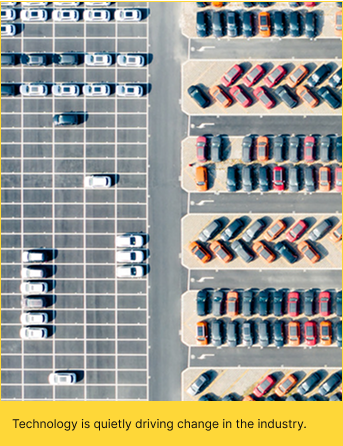
One of the clearest markers of this shift is the movement away from fixed-function infrastructure toward flexible, app-based experiences. Parking today begins not at a gate or meter, but on your phone. Parking-specific apps enable drivers to search for, reserve, pay for, and extend parking—all without needing to interact with a kiosk. This experience is reinforced by the presence of license plate recognition (LPR) cameras, sensor-embedded spaces, and digital signage that offers real-time availability updates. The journey from car to curb is being optimized—and monetized—by software.
“We need to keep in mind that with all this change, garages still need to offer a higher level of personal service.”
-Shunt Madanyan, VP of Revenue Management, Reimagined Parking
Operational and Revenue Impacts
Across the parking industry, operators that have embraced mobile-first platforms are already seeing striking results. By shifting away from cash, some facilities have reduced collection costs by as much as 40–50% while cutting out nearly 7% in revenue loss typically associated with outdated systems. Digital payments now account for 10–20% more transactions, easing dependence on hardware-intensive pay stations, while administrative burdens have fallen by more than half. The effect is clear: in garages and lots where analog once dominated, digitization isn’t just a convenience—it is directly reshaping revenue streams and operational efficiency.
Beyond the numbers is something deeper: a cultural shift in how parking is perceived and managed. Parking management, once seen as a service to the monolith of urban infrastructure, has evolved into managing flows of people, data, and service expectations.
The Road Ahead: AI, Sensors, and Blockchain
As sensors, AI, and mobile payments become embedded into everyday operations, the definition of “parking management” continues to expand. In the future, smart infrastructure will be able to alert operators to maintenance needs, as well as generate dynamic pricing models based on real-time occupancy, and even interface with transit apps and AV systems. Blockchain-based solutions are also emerging, enabling secure, anonymous parking transactions—significant in an era of rising privacy expectations.
Even amid this technological growth, the human factor remains critical. Shunt Madanyan, VP of Revenue Management of Reimagined Parking, cautions that, “We need to keep in mind that with all this change, garages still need to offer a higher level of personal service. For building owners, parking is the first and last thing tenants experience, and it shapes their view of the whole building.”
Balancing Automation and Service
This is the balancing act that will define the next phase of the industry: harnessing automation and integration without hollowing out the relational aspect of the service. Technology must support—not supplant—insight. The platforms and systems being deployed today are not merely upgrades; they are the foundation of a new operating model—one in which parking is intelligent, responsive, and fully integrated into the mobility grid.
As cities invest in smarter infrastructure, it is citing a shift to user-centric demands for a frictionless parking experience. The once-neglected parking space that makes slow progress toward change has emerged as one of the most dynamic frontiers in urban technology. The “quiet revolution” is real, but it won’t be won by technology alone. The operators who combine clean data, credible forecasts, and human-centered service will win it, and those organizations that remember that the job is not just to modernize parking, but to protect and grow the value of the properties they serve.
Perspectives:
Data Strategy and Monetization: A New Path
For much of its history, parking operated on a simple financial logic: people pay to park their cars. The revenue model was straightforward, predictable, and—frankly—limited in scope. But in recent years, that model has begun to fracture. Revenue from traditional parking is now just one piece of a much more complex puzzle. Economic pressures, changing commuter habits, emerging mobility modes, and the demand for flexible urban space have all conspired to push the industry beyond the pay station. What’s emerging is something far more ambitious: a new economic architecture where parking is not just a service, but a platform for value creation.
A Strategic Pivot
This isn’t merely a response to declining utilization in traditional downtown garages or the rise of remote work. It’s a strategic pivot to reposition parking assets as dynamic revenue engines—assets that can flex, adapt, and evolve based on user behavior, infrastructure partnerships, and technological insight. From smart pricing to mobility integration to embedded retail, diversification is no longer optional. It’s the blueprint for future viability.
Data as the Driver
At the heart of this transformation is data. Data enables the change. The parking industry is no longer defined solely by the physical spaces it manages—the intelligence behind those spaces increasingly defines it. Take dynamic pricing optimization, for example, by harnessing accurate, up-to-date transactional data for every vehicle and layering it over years of demand history, operators can predict future demand better and make pricing decisions that will maximize revenue. It’s a strategy that rewards flexibility, drawing lessons from airlines and hospitality while adapting them to the rapidly shifting realities of curbside, off-street, and mixed-use parking environments. For operators, this is more than a revenue play—it’s a way to guide driver behavior, spread demand, and ensure the right parking space is available at the right time.
Equally transformative is the industry’s role in urban mobility planning. Parking data no longer exists in a silo; it’s becoming part of a unified transportation picture.
“Bad inputs lead to bad decisions. So accurate, timely, and consistently formatted data is the fuel that drives advanced analytics and automation.”
-Tarek Moussa, CRO of Reimagined Parking
With insights gathered from sensors, payment apps, and even vehicle telematics, operators can feed real-time intelligence into city mobility platforms. This integration allows planners to forecast peak periods, coordinate with public transit, and place micromobility hubs where they’re needed most. Parking, once seen as an endpoint in the travel chain, is emerging as a connective tissue—shaping traffic flow, reducing congestion, and supporting more sustainable travel options.
Innovations in predictive maintenance and asset management are utilizing machine learning models to sift through vast amounts of operational data—from gate arm lift counts to kiosk transaction rates—spotting the subtle signs of wear before a breakdown occurs. Even license plate recognition systems can be monitored for small degradations in image quality, enabling service teams to act before customers ever notice a problem. The payoff is a smoother, more reliable parking experience, reduced downtime, and a more substantial return on investment in infrastructure.
The Importance of Data Hygiene
None of these innovations can deliver on their promise without a foundation of strong data capture and hygiene. Reimagined Parkings Chief Revenue Officer Tarek Moussa adds: “That means not just more data but better data—accurate, complete, and timely—so decisions aren’t built on noise. We have to demonstrate the accuracy of the information,” he says. “Bad inputs lead to bad decisions.” So accurate, timely, and consistently formatted data is the fuel that drives advanced analytics and automation. Poorly integrated systems, duplicate records, or incomplete datasets can quickly erode the value of even the most sophisticated tools.
Leading operators are investing in robust data governance—standardizing inputs, validating accuracy, and ensuring interoperability across platforms—so the intelligence they rely on is trustworthy. In this way, data hygiene is not just an operational necessity; it’s a strategic advantage, ensuring that every decision, forecast, and customer interaction is built on a rock-solid digital foundation.
Lessons from Healthcare and Beyond
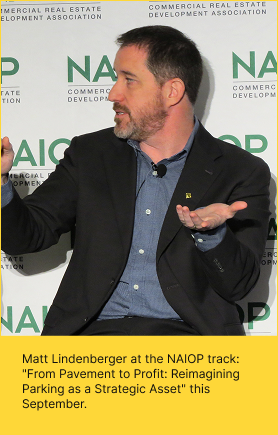
“We’re finding data strategy as a key component of parking solutions before any software is purchased,” says Matt Lindenberger, Chief Technology Officer at Reimagined Parking’s BI Studio. “We have been working with major hospitals in British Columbia’s Lower Mainland Health portfolio, with more than 40 facilities; their challenge was capacity. Parking shortages created a need for patient parking that was always available and within close proximity to the area of need at each facility. Creating a system capable of delivering sharper insights to manage resources more effectively was the solution.”
Those early conversations revealed a broader pattern: healthcare providers, commercial real estate operators, and mixed-use portfolios all faced similar demands for deeper visibility, albeit with different nuances. Rather than creating one-off solutions for each, the opportunity lay in developing a scalable, unified platform. The result was a parking-focused data warehouse designed to normalize fragmented systems and transactions—an approach deliberately chosen over custom builds, which may satisfy individual cases but inevitably stall when growth and complexity increase.
Mindsets and Management Matter
Yet, this change is not just about hardware and software; the change in management means that mindsets need to change to turn insights into profitable actions. Matt continues: “Parking is physical. Data informs decisions, but humans must act on it with a data-driven mindset. Each lot is a unique business, influenced by its environment, weather, and tenant mix. Clean, well-presented, actionable data provides visibility, while success depends on operational expertise and alignment with client goals.”
The parking industry is in a new chapter as cities rethink what mobility means, and as private operators seek to insulate themselves from volatility, parking is stepping into the spotlight. Strategic management of your data isn’t about abandoning the core business. It’s about expanding the value proposition—about recognizing that a parking space can host more than a car. It can host a service. A transaction. A connection. And increasingly, a whole new path to monetization.
Sign up to receive this newsletter in your inbox. Questions or comments on any topic? Contact us.